






Can an Intelligent Pump Controller control multiple pumps?
As a supplier of Intelligent Pump Controllers, I often encounter inquiries from customers about the capabilities of our products, particularly whether an intelligent pump controller can control multiple pumps. This is a crucial question for many industries and applications where multiple pumps are used to meet various operational requirements. In this blog post, I will delve into this topic, exploring the technical aspects, benefits, and limitations of using an intelligent pump controller to manage multiple pumps.
Technical Feasibility
Modern intelligent pump controllers are designed with advanced microprocessors and sophisticated algorithms that enable them to handle complex control tasks. These controllers can be programmed to monitor and control multiple pumps simultaneously, providing a centralized and efficient solution for pump management.
One of the key features of an intelligent pump controller is its ability to communicate with multiple sensors and actuators. By connecting sensors to each pump, the controller can gather real - time data such as flow rate, pressure, temperature, and motor current. This data is then analyzed by the controller's algorithms, which can make decisions based on pre - set parameters. For example, if the flow rate in a system drops below a certain level, the controller can start an additional pump to maintain the required flow.
Moreover, intelligent pump controllers support various communication protocols, such as Modbus, Profibus, and Ethernet. This allows them to interface with other control systems, such as Programmable Logic Controllers (PLCs) or Supervisory Control and Data Acquisition (SCADA) systems. Through these interfaces, the controller can receive commands from a higher - level control system and send back status information about the pumps.
Benefits of Controlling Multiple Pumps with an Intelligent Controller
Energy Efficiency
One of the most significant benefits of using an intelligent pump controller to control multiple pumps is energy savings. The controller can adjust the speed and operation of each pump based on the actual demand. For instance, during periods of low demand, the controller can shut down some pumps or reduce their speed, while during peak demand, it can start additional pumps. This dynamic control ensures that the pumps operate at their most efficient points, reducing energy consumption and lowering operating costs.
Improved System Reliability
By monitoring the performance of each pump in real - time, the intelligent pump controller can detect potential problems early. If a pump shows signs of abnormal operation, such as a high motor current or a low flow rate, the controller can take corrective actions, such as shutting down the pump or sending an alarm to the operator. This proactive approach helps prevent pump failures and reduces downtime, improving the overall reliability of the pumping system.
Simplified Operation and Maintenance
Managing multiple pumps manually can be a complex and time - consuming task. An intelligent pump controller simplifies this process by providing a single interface for monitoring and controlling all the pumps. Operators can easily adjust the settings, view the status of each pump, and receive alarms through a user - friendly display or a remote control system. Additionally, the controller can generate detailed reports on pump performance, which can be used for maintenance planning and troubleshooting.
Limitations and Considerations
While an intelligent pump controller offers many advantages in controlling multiple pumps, there are also some limitations and considerations that need to be taken into account.
Compatibility
Not all pumps are compatible with every intelligent pump controller. Before selecting a controller, it is essential to ensure that it is compatible with the type, size, and power requirements of the pumps. Some pumps may require specific control algorithms or communication protocols, which may not be supported by all controllers.
Initial Investment
The cost of an intelligent pump controller is generally higher than that of a traditional pump controller. Additionally, the installation and configuration of the controller may require specialized knowledge and skills, which can add to the overall cost. However, it is important to consider the long - term benefits, such as energy savings and reduced maintenance costs, when evaluating the investment.
System Complexity
Controlling multiple pumps with an intelligent controller can increase the complexity of the pumping system. There are more components to install, configure, and maintain, and there is a higher risk of system failures if not properly designed and implemented. It is crucial to work with experienced engineers or technicians to ensure that the system is designed and installed correctly.

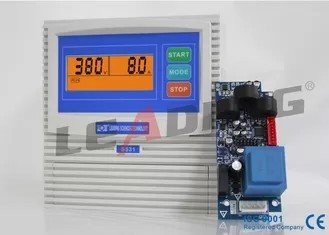
Our Product Offerings
As a supplier of Intelligent Pump Controllers, we offer a range of products that are suitable for controlling multiple pumps. Our Single Phase Pump Control for Waste Water Tank Sewage Sink is designed for single - phase pumps used in waste water applications. It can be easily programmed to control multiple single - phase pumps, providing reliable and efficient operation.
Our DOL Start Type Intelligent Pump Controller with Stalled Protection is suitable for direct - on - line (DOL) start pumps. It features stalled protection, which helps prevent pump damage in case of a blockage or other abnormal conditions. This controller can be used to control multiple DOL start pumps in various industrial applications.
For three - phase pumps, our Three Phase Pump Control for Universal Pump provides a comprehensive solution. It can monitor and control multiple three - phase pumps, offering features such as variable speed control, overload protection, and remote monitoring.
Conclusion
In conclusion, an intelligent pump controller can indeed control multiple pumps, offering significant benefits in terms of energy efficiency, system reliability, and simplified operation. However, it is important to carefully consider the compatibility, initial investment, and system complexity before implementing such a solution.
If you are interested in learning more about our Intelligent Pump Controllers or have specific requirements for controlling multiple pumps, we encourage you to contact us for a detailed discussion. Our team of experts is ready to assist you in selecting the right product for your application and providing professional technical support.
References
- "Pump Handbook" by Igor Karassik et al.
- "Control Systems Engineering" by Norman S. Nise.