


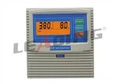
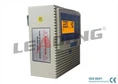


Commercial simplex pump controllers play a crucial role in the efficient management of pumps, especially when it comes to controlling them based on water level. As a supplier of Commercial Simplex Pump Controllers, I have witnessed firsthand the importance and effectiveness of these devices in various applications. In this blog, we will delve into the mechanism of how a Commercial Simplex Pump Controller controls the pump according to the water level.
Understanding the Basics of a Commercial Simplex Pump Controller
Before we explore how it controls the pump based on water level, let's first understand what a Commercial Simplex Pump Controller is. A simplex pump controller is designed to manage a single pump. It is widely used in commercial settings such as small - scale water supply systems, borehole pumping, and water transfer applications.
These controllers are equipped with advanced sensors and control algorithms that allow them to monitor and regulate the operation of the pump. They are built with high - quality materials to ensure durability and reliability in different environments. For example, we offer the Small Size Simplex Pump Controller Plastic Panel Material, which is made of plastic panel material, providing a cost - effective and lightweight solution for some applications.
Water Level Sensing
The first step in controlling the pump based on water level is to accurately sense the water level. Most Commercial Simplex Pump Controllers use one of two main types of water level sensors: float switches and pressure sensors.
Float Switches
Float switches are a simple and reliable way to sense water level. They consist of a float that rises and falls with the water level. Inside the float, there is a switch mechanism. When the water level reaches a certain point, the float moves, and the switch is activated.
For example, in a water storage tank, a float switch can be set at a low - level point and a high - level point. When the water level drops to the low - level point, the float switch sends a signal to the pump controller. The controller then interprets this signal and starts the pump to refill the tank. When the water level rises to the high - level point, the float switch sends another signal, and the controller stops the pump.
Pressure Sensors
Pressure sensors work based on the principle that the pressure of water in a tank or pipe is proportional to the water level. As the water level increases, the pressure at the bottom of the tank or in the pipe also increases.
A pressure sensor is installed at a specific location, usually at the bottom of the tank or in the suction pipe of the pump. It measures the pressure and converts it into an electrical signal. The pump controller then uses this signal to determine the water level. Pressure sensors are often used in more complex systems where a continuous and accurate measurement of the water level is required. For instance, in borehole pumping applications, Single Phase Pump Controller for Borehole Pumps can utilize pressure sensors to precisely control the pump operation according to the water level in the borehole.
Control Logic
Once the water level is sensed, the pump controller uses a control logic to decide when to start and stop the pump. The control logic is programmed into the controller's microprocessor.
Start and Stop Points
The controller has pre - set start and stop points for the water level. These points can be adjusted according to the specific requirements of the application. For example, in a water supply system for a small building, the start point might be set at a relatively low water level to ensure that there is always enough water in the tank, and the stop point might be set at a high water level to prevent over - filling.
When the water level drops below the start point, the controller sends a signal to the pump motor to start. The pump then begins to draw water and fill the tank or supply the water to the system. When the water level rises above the stop point, the controller sends a signal to stop the pump.
Hysteresis
To prevent the pump from cycling on and off too frequently, the controller uses a concept called hysteresis. Hysteresis is a difference between the start and stop points. For example, if the start point is set at 20% of the tank's capacity and the stop point is set at 80% of the tank's capacity, there is a 60% difference. This difference ensures that the pump does not start and stop immediately when the water level fluctuates slightly around the start or stop points.
Protection and Monitoring Functions
In addition to controlling the pump based on water level, Commercial Simplex Pump Controllers also have several protection and monitoring functions.
Dry - Run Protection
Dry - run protection is an important feature that prevents the pump from running when there is no water. If the water level drops too low and the pump continues to run, it can cause damage to the pump motor. The controller monitors the water level and, if it detects that the water level is below a certain critical point, it stops the pump to prevent dry - running.
Overload Protection
The controller also monitors the current drawn by the pump motor. If the current exceeds a pre - set limit, it indicates that the pump is overloaded. The controller then stops the pump to protect the motor from damage.
Applications of Commercial Simplex Pump Controllers
Commercial Simplex Pump Controllers are used in a wide range of applications.
Borehole Pumping
In borehole pumping, the Single Phase Pump Controller for Borehole Pumps is used to control the pump based on the water level in the borehole. It ensures that the pump does not run when the water level is too low and stops when the water level in the storage tank is full.
Water Supply Transfer
For water supply transfer applications, the Monophase Simplex Pump Controller for Water Supply Transfer can be used to transfer water from one tank to another or from a well to a water distribution system. It controls the pump operation based on the water levels in the source and destination tanks.
Conclusion
Commercial Simplex Pump Controllers are essential devices for controlling pumps based on water level. They use advanced sensing and control technologies to ensure efficient and reliable pump operation. With features such as accurate water level sensing, adjustable control logic, and various protection functions, these controllers can meet the diverse needs of different applications.
If you are looking for a high - quality Commercial Simplex Pump Controller for your project, we are here to help. Our controllers are designed with the latest technology and high - quality materials to provide long - term performance. Whether you need a controller for borehole pumping, water supply transfer, or other applications, we have the right solution for you. Contact us to discuss your requirements and start a procurement negotiation today.


References
- Pump Handbook, by Igor J. Karassik et al.
- Principles of Fluid Mechanics and Thermodynamics in Hydraulic Machinery, by Robert L. Daugherty and Joseph B. Franzini.