




Hey there! As a supplier of Commercial Simplex Pump Controllers, I often get asked about the input and output signals of these nifty devices. So, I thought I'd take some time to break it down for you in a way that's easy to understand.
Input Signals
Pressure Sensors
One of the most common input signals for a commercial simplex pump controller comes from pressure sensors. These sensors are like the ears of the controller, listening to the pressure levels in the system. When the pressure drops below a certain set point, it's a signal to the controller that it's time to start the pump. For example, in a water supply system, if the pressure in the pipes gets too low, the pressure sensor will send a signal to the controller, and the pump will kick into action to boost the pressure back up.
Let's say you have a building with a water supply system that uses a simplex pump controller. The pressure sensor is set to a specific pressure range, like 30 - 50 psi. If the pressure drops below 30 psi, the sensor sends an electrical signal to the controller. This signal is usually in the form of a voltage change, which the controller can easily interpret.

Level Sensors
Level sensors are another important input source. They're used in applications where the level of a liquid needs to be monitored, such as in a water tank or a sewage pit. There are different types of level sensors, like float switches and ultrasonic sensors.
Float switches are simple and reliable. They work by using a floating object that rises and falls with the liquid level. When the liquid level drops to a certain point, the float switch changes its position, sending an on or off signal to the controller. Ultrasonic sensors, on the other hand, use sound waves to measure the distance to the liquid surface. They can provide more accurate level measurements and are often used in more complex systems.
For instance, in a water tank, if the water level drops below a pre - set level, the level sensor will send a signal to the controller. This signal tells the controller to start the pump and refill the tank.
Flow Sensors
Flow sensors are used to measure the rate of fluid flow in a system. They can be used to detect if there's a problem with the flow, like a blockage or a leak. If the flow rate drops below a certain threshold, the flow sensor will send a signal to the controller.
Let's imagine a fire sprinkler system. The flow sensor continuously monitors the water flow through the pipes. If there's a sudden drop in flow, it could indicate a blockage in the pipes. The flow sensor sends a signal to the simplex pump controller, which can then take appropriate action, like shutting down the pump to prevent damage.
Output Signals
Pump Start/Stop Signals
The most obvious output signal of a commercial simplex pump controller is the signal to start or stop the pump. Based on the input signals it receives, the controller decides when to turn the pump on and off. When the conditions are right, like when the pressure is low or the liquid level is low, the controller sends an electrical signal to the pump motor to start it.
This signal is usually a high - voltage pulse that activates the motor starter. Once the desired conditions are met, like the pressure reaching the set point or the tank being filled to the appropriate level, the controller sends another signal to stop the pump.
Alarm Signals
Commercial simplex pump controllers also have the ability to send alarm signals. These signals are used to alert operators when there's a problem with the system. For example, if the pump motor overheats, the controller can send an alarm signal.
Alarm signals can be in different forms. They can be visual, like a warning light on the control panel, or auditory, like a buzzer. Some controllers can also send remote alarm signals, like an email or a text message, to let the operators know about the problem even if they're not on - site.
Status Signals
Status signals are used to provide information about the current state of the pump and the system. These signals can be sent to a monitoring system or a control room. For example, a status signal can indicate whether the pump is running, stopped, or in an alarm state.
These signals are often used for system monitoring and maintenance. Operators can use the status signals to keep track of the pump's performance and schedule maintenance tasks accordingly.
Our Product Offerings
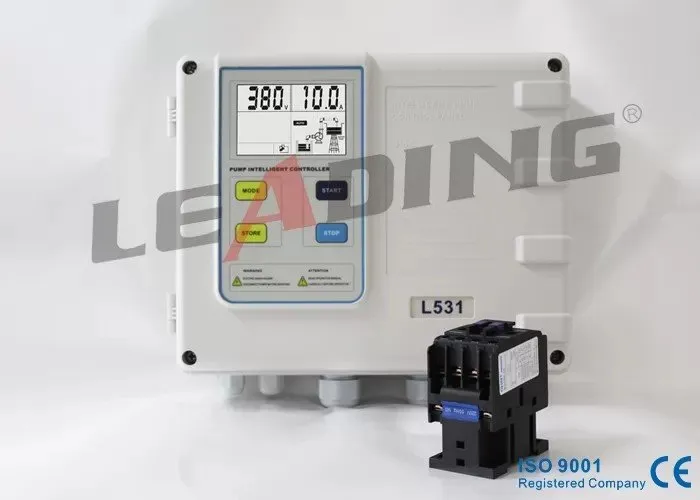
We offer a range of commercial simplex pump controllers to meet different needs. Check out our Single Pump Motor Control Panel Mobile Operated. This controller is designed for easy mobile operation, allowing you to control the pump from anywhere.
If you're looking for a controller for submersible pumps, our Submersible Pump Protection Simplex Pump Controller is a great choice. It provides protection for your submersible pump, ensuring its long - term reliability.
And for those who need a high - power controller, our Universal Simplex Pump Controller 380V with Maximum Output Power 15KW is the answer. It can handle high - power applications with ease.
Why Choose Our Commercial Simplex Pump Controllers?
Our controllers are designed with the latest technology to ensure accurate and reliable operation. They're built to withstand harsh environmental conditions, making them suitable for a wide range of applications.
We also provide excellent customer support. Our team of experts is always ready to help you with any questions or problems you might have. Whether you need help with installation, programming, or troubleshooting, we've got your back.
Contact Us for Procurement
If you're interested in our commercial simplex pump controllers, we'd love to hear from you. We can provide you with detailed product information, pricing, and technical support. Don't hesitate to reach out to us for a procurement discussion. We're confident that our products will meet your needs and exceed your expectations.
References
- Pump Control Handbook: A comprehensive guide to pump control systems and their operation.
- Electrical Engineering for Pump Systems: A textbook that covers the electrical aspects of pump control.