




In the realm of fluid systems, the simplex pump controller emerges as a crucial component, especially within variable - speed pump systems. As a supplier of simplex pump controllers, I am eager to delve into the intricacies of its speed - control principle. This exploration will not only provide valuable insights into the technology but also shed light on the significance of this device in various applications.
Understanding the Basics of a Simplex Pump Controller
A simplex pump controller is a device designed to manage the operation of a single pump. In a variable - speed pump system, the ability to control the pump's speed is of utmost importance. Unlike traditional fixed - speed pumps, variable - speed pumps can adjust their rotational speed according to the system requirements. This flexibility allows for more efficient energy usage, better pressure control, and enhanced overall system performance.
The simplex pump controller acts as the brain of the pump, monitoring and adjusting its speed based on a set of pre - determined parameters. These parameters are often related to factors such as system pressure, flow rate, and water level. By precisely controlling the pump speed, the controller can ensure that the pump operates at an optimal level, providing the necessary fluid supply while minimizing energy consumption.
Speed - Control Principle: The Fundamentals
At the heart of the speed - control principle of a simplex pump controller is the concept of feedback control. This control strategy involves continuously measuring a variable (such as pressure or flow rate) and comparing it to a desired setpoint. Based on the difference between the measured value and the setpoint (known as the error), the controller adjusts the pump's speed accordingly.
For instance, if the system pressure drops below the setpoint, the controller detects this error and increases the pump's speed. By increasing the speed, the pump can deliver more fluid, thereby raising the system pressure. Conversely, if the pressure rises above the setpoint, the controller reduces the pump speed to prevent over - pressurization.

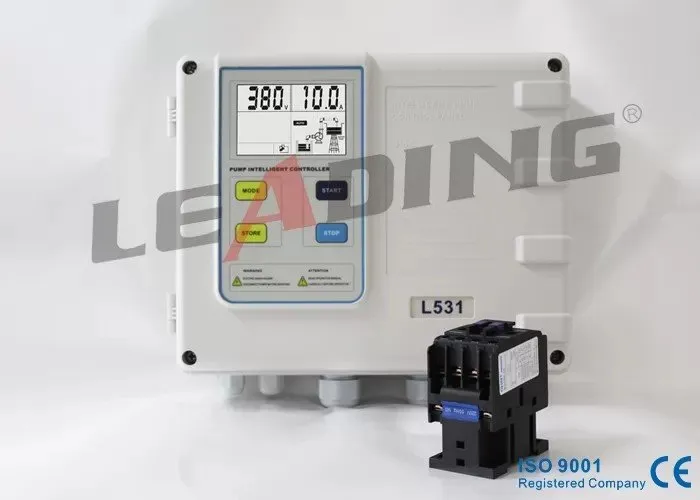
This feedback loop is made possible through the use of sensors. Pressure sensors, for example, are commonly used to measure the system pressure. These sensors convert the pressure into an electrical signal, which is then sent to the controller. The controller processes this signal, calculates the error, and determines the appropriate adjustment to the pump speed.
Components Involved in Speed Control
Several key components work together to achieve the speed - control function of a simplex pump controller. These include the sensors, the controller itself, and the variable - frequency drive (VFD).
Sensors
As mentioned earlier, sensors play a vital role in providing the necessary feedback for speed control. In addition to pressure sensors, flow sensors can also be used to measure the fluid flow rate. Water level sensors are used in applications where the pump is used to fill or empty a tank. These sensors provide real - time data to the controller, enabling it to make informed decisions about pump speed adjustments.
Controller
The controller is the central processing unit of the system. It receives the signals from the sensors, processes the data, and generates the control signals for the VFD. Modern simplex pump controllers are often equipped with advanced microprocessors, which can handle complex algorithms for precise speed control. They also feature user - friendly interfaces, allowing operators to easily set the desired parameters and monitor the system's performance.
Variable - Frequency Drive (VFD)
The VFD is responsible for adjusting the electrical frequency supplied to the pump motor. By changing the frequency, the VFD can control the motor's speed. When the controller sends a signal to increase or decrease the pump speed, the VFD adjusts the frequency accordingly. This results in a proportional change in the motor's rotational speed, allowing for smooth and precise speed control.
The Role of the Simplex Pump Controller in Energy Efficiency
One of the primary advantages of using a simplex pump controller in a variable - speed pump system is its contribution to energy efficiency. Traditional fixed - speed pumps operate at a constant speed, regardless of the actual demand. This often leads to excessive energy consumption, especially when the system requires less fluid.
In contrast, a variable - speed pump controlled by a simplex pump controller can adjust its speed based on the demand. During periods of low demand, the pump can operate at a lower speed, consuming less energy. When the demand increases, the pump speed can be increased to meet the requirements. This ability to match the pump output to the system demand results in significant energy savings over time.
Applications of Simplex Pump Controllers in Variable - Speed Pump Systems
Simplex pump controllers find wide applications in various industries. In water supply systems, they are used to maintain a constant water pressure in buildings, ensuring a steady supply of water to all users. In irrigation systems, the controllers can adjust the pump speed based on the water requirements of the crops, optimizing water usage.
In industrial processes, simplex pump controllers are used to control the flow and pressure of fluids in pipelines. They can also be used in wastewater treatment plants to manage the pumping of sewage and other fluids. The ability to control the pump speed accurately allows for better process control and improved system reliability.
Advanced Features of Modern Simplex Pump Controllers
Modern simplex pump controllers come with a range of advanced features that enhance their performance and functionality. For example, some controllers are equipped with wireless communication capabilities, allowing for remote monitoring and control. This is particularly useful in applications where the pump is located in a remote or hard - to - reach area.
The Multifunction Wireless Water Pump Controller is a prime example of such a device. It offers real - time monitoring of system parameters, such as pressure, flow rate, and pump status, through a wireless network. This enables operators to make timely adjustments and diagnose any issues remotely.
Another advanced feature is the ability to integrate with other control systems. For instance, the controller can be connected to a building management system (BMS) or an industrial automation system. This integration allows for seamless operation and coordination between different components of the overall system.
The Single Pump Motor Control Panel Mobile Operated offers mobile operation capabilities, allowing users to control the pump from their smartphones or tablets. This provides greater flexibility and convenience, especially for operators who need to monitor and control the pump while on the go.
In addition, modern simplex pump controllers often include built - in protection features. The Submersible Pump Protection Simplex Pump Controller is designed to protect the submersible pump from various faults, such as over - current, over - voltage, and dry - running. These protection features help to extend the pump's lifespan and reduce maintenance costs.
Contact for Procurement and Consultation
If you are interested in learning more about our simplex pump controllers or are considering a procurement, we invite you to reach out. Our team of experts is ready to provide you with detailed information, technical support, and customized solutions to meet your specific needs. Whether you are involved in a small - scale water supply project or a large - scale industrial process, our simplex pump controllers can offer the reliable and efficient performance you require.
References
- Smith, J. (2018). Variable - Speed Pump Technology. Fluid Engineering Journal, 25(3), 45 - 57.
- Brown, A. (2019). Advanced Pump Control Systems. Industrial Automation Review, 12(2), 56 - 69.
- Green, C. (2020). Energy - Efficient Pumping Solutions. Energy Management Magazine, 30(4), 78 - 89.