


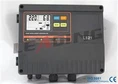

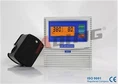
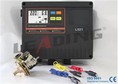
Hey there! I'm an actual person running a business that supplies Intelligent Pump Controllers. Today, I wanna chat about the kinds of sensors used in these cool gadgets.
Pressure Sensors
One of the most common sensors in Intelligent Pump Controllers is the pressure sensor. You see, these sensors are super important because they help the pump controller figure out the pressure in the system. Think about it like this: when you're filling up an overhead tank, the pressure in the pipes changes as the water level goes up. A pressure sensor can detect these changes and send signals to the pump controller.
Let's say you have an Automatic Submersible Water Pump Controller for Overhead Tank. The pressure sensor in it will keep an eye on the pressure in the pipes leading to the tank. When the pressure drops below a certain level, it means the water level in the tank is low, and the pump controller will start the pump to fill it up. Once the pressure reaches the set upper limit, indicating the tank is full, the pump will stop. This way, you don't have to worry about over - filling or under - filling the tank.
Flow Sensors
Flow sensors are another key player in the world of Intelligent Pump Controllers. These sensors measure the volume of water flowing through the pipes. They're useful in a bunch of situations. For example, in industrial settings where you need to precisely control the amount of water being used in a process.
Suppose you have a manufacturing plant that uses water for cooling. The Intelligent Pump Controller Single Phase Dry Run Protection with Sensor Free with a flow sensor can ensure that the right amount of water is flowing through the cooling system. If the flow rate drops below the required level, it could mean there's a blockage in the pipes or the pump isn't working properly. The controller can then take action, like shutting off the pump to prevent damage.
Temperature Sensors
Temperature sensors also have their place in Intelligent Pump Controllers. They monitor the temperature of the pump motor and the water in the system. Overheating can be a big problem for pumps. If the motor gets too hot, it can lead to a breakdown and costly repairs.
Let's say you have a submersible pump that's constantly running in a hot environment. The temperature sensor in the Submersible Water Pump Control Box will keep track of the motor's temperature. If it starts to rise above a safe level, the pump controller can slow down the pump or shut it off until it cools down. This not only protects the pump but also extends its lifespan.
Level Sensors
Level sensors are crucial when it comes to controlling the water level in tanks or reservoirs. There are different types of level sensors, such as float switches and ultrasonic sensors.
Float switches are simple and reliable. They work like a seesaw. As the water level rises or falls, the float moves up or down, and this movement is used to send a signal to the pump controller. Ultrasonic sensors, on the other hand, use sound waves to measure the distance to the water surface. They're more accurate and can be used in situations where float switches might not work well, like in tanks with a lot of debris.
For example, if you have a large water storage tank, a level sensor in the pump controller can ensure that the tank never runs dry or overflows. When the water level gets too low, the pump will start, and when it reaches the maximum level, the pump will stop.
Dry - Run Sensors
Dry - run sensors are a lifesaver for pumps. A dry - run occurs when a pump is running without water. This can cause serious damage to the pump, like overheating the motor and wearing out the seals.
The Intelligent Pump Controller Single Phase Dry Run Protection with Sensor Free uses dry - run sensors to detect when there's no water in the pump. Once it senses a dry - run condition, it will immediately shut off the pump to prevent damage. This feature is especially important in areas where water supply is unreliable.
Vibration Sensors
Vibration sensors are used to detect abnormal vibrations in the pump. Excessive vibration can be a sign of a mechanical problem, such as a misaligned motor or a worn - out bearing.
By monitoring the vibration levels, the pump controller can alert you to potential issues before they turn into major problems. This allows you to schedule maintenance and avoid unexpected breakdowns.


Why These Sensors Matter
All these sensors work together to make Intelligent Pump Controllers more efficient, reliable, and safe. They help in automating the pump operation, reducing the need for manual intervention. This means less labor cost and fewer chances of human error.
For example, in a domestic setting, you can set up an Intelligent Pump Controller with the right sensors, and you won't have to constantly check the water level in your overhead tank. In an industrial setting, it can ensure that the manufacturing process runs smoothly without any disruptions due to pump failures.
Conclusion
So, as you can see, there are a variety of sensors used in Intelligent Pump Controllers, each with its own unique function. Whether it's pressure, flow, temperature, level, dry - run, or vibration sensors, they all play a vital role in making the pump work at its best.
If you're in the market for an Intelligent Pump Controller, we're here to help. Our products are equipped with high - quality sensors that ensure reliable and efficient operation. We can provide you with the right solution based on your specific needs. Whether it's for a small home system or a large industrial setup, we've got you covered.
Don't hesitate to reach out if you have any questions or want to discuss your requirements. We're always happy to have a chat and help you find the perfect Intelligent Pump Controller for your situation. Let's work together to make your pump system more intelligent and hassle - free!
References
- Sensor Technologies for Industrial Applications, John Wiley & Sons
- Handbook of Pump Technology, McGraw - Hill Education