


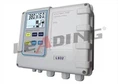
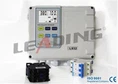
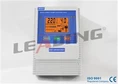
(Programmable Logic Controller, PLC for short), a digital electronic device with a microprocessor, a digital logic controller for automatic control, which can load control instructions into memory for storage and execution at any time. Programmable controller is composed of internal CPU, instruction and data memory, input and output unit, power module, digital simulation and other units. PLCs can receive (input) and send (output) many types of electrical or electronic signals and use them to control or supervise almost all kinds of mechanical and electrical systems.
The original programmable logic controller only had the function of circuit logic control, so it was named programmable logic controller. Later, with the continuous development, these computer modules with simple functions at the beginning have already included logic control, sequential control, and analog control. , multi-computer communication and many other functions, the name is also changed to Programmable Controller (Programmable Controller), but because its abbreviation is also the abbreviation of PC and Personal Computer (Personal Computer) Conflict, and due to years of use habits, people The term programmable logic controller is still often used, and the acronym PLC is still used in the terminology.
Now the use of programmable logic controllers in the industry is quite close to that of a lightweight computer, and even a programmable automation controller (Programmable Automation Controller, referred to as a combination of a personal computer (using an embedded operating system) and a PLC architecture has emerged. PAC), an electronic system capable of controlling machinery and equipment, manufacturing processes, and other control modules through digital or analog input/output modules. Programmable logic controllers are widely used in the current industrial control field. In the field of industrial control, the application of PLC control technology has become an indispensable member of the industry.